The corridos tumbados wave is running into a wall, literally state by state, as Mexican authorities expand performance bans while the genre simultaneously posts some of the strongest streaming numbers in Latin music history. That tension is now a practical logistics problem for any touring act in the regional mexicano space.
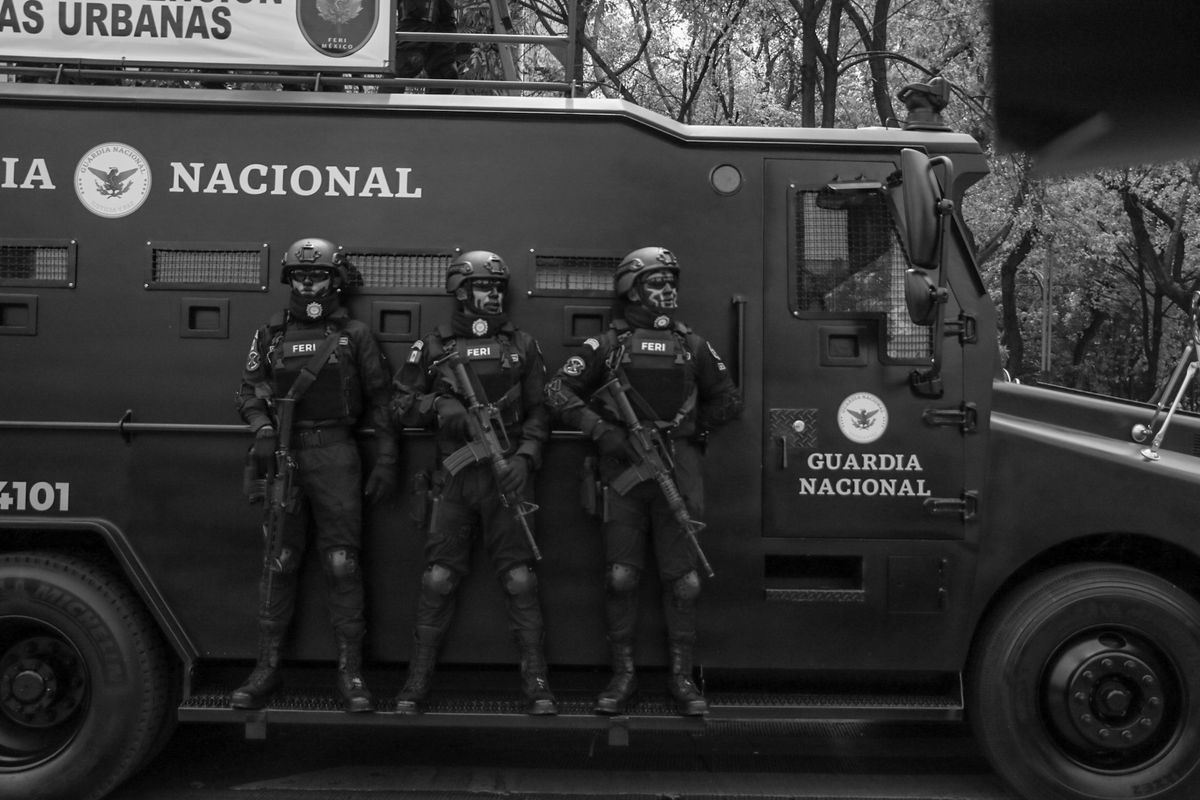
As of mid-2025, restrictions on narcocorrido and corridos bélicos performances are active across at least 10 of Mexico's 32 states, with Mexico City in the process of formalizing its own policy, according to Billboard's reporting on the México Canta initiative. The federal government's México Canta contest explicitly steers competition entrants toward traditional and "clean" regional formats, mariachi, norteño, and banda sinaloa, as a counterweight to the narco-adjacent corrido subgenre. The contest is cultural policy as much as it is music promotion.
The commercial backdrop makes this especially complicated. Mexico is the tenth largest recorded music market in the world, and roughly 70 percent of Mexican streaming consumption flows through regional mexicano, per IFPI's 2026 Global Music Report. The genre being restricted is not a niche. It is the primary listening behavior for the country's largest music market demographic.
What the Ban Map Actually Looks Like
The restrictions are not uniform. Each state implements its own language, covering different contexts: some ban narcocorridos at events with public permits, others restrict them in venues that receive municipal funding, others focus on content that "glorifies" criminal organizations by name. The definitions vary enough that a set list legal in Jalisco might trigger a fine in Sinaloa.
Mexico City's incoming policy is significant because it is the country's largest live market. A ban there compresses routing options for any corridos act doing arena or theater-level business. It is not a symbolic restriction. It changes the math on which Mexican dates are viable without a content adjustment.
The practical problem for a touring act: there is no federal clearinghouse telling you which songs clear which state's definition of restricted content. Managers and booking agents are building that knowledge show by show, usually after one conversation with the local promoter goes sideways at load-in.
The Chart Run Happening at the Same Time
While the ban map spreads, the numbers are moving in the opposite direction. Corridos acts, particularly those in the tumbados and bélicos lanes, are posting playlist placements, chart positions, and streaming volumes that would have seemed improbable for regional music five years ago.
The IFPI data is worth sitting with: 70 percent of Mexican streaming consumption in a market the size of Mexico's tenth-place global ranking means corridos and its adjacent subgenres are driving real volume at the global level, not just regionally. Artists like Peso Pluma, Natanael Cano, and Fuerza Regida have broken into Billboard's Hot 100 and the global Spotify charts in a way that makes the genre commercially undeniable regardless of what state legislatures are drafting.
That split, massive global commercial momentum and shrinking domestic live opportunity, is the core tension for any manager in this space right now. You are booking a world tour while part of your home territory is being litigated in ways that could affect which songs you can perform on which nights.
What Touring Acts Are Actually Doing
The adjustments are happening in a few directions at once.
The first is alternate set list planning. Acts that play both traditional norteño and corridos repertoire are structuring shows so that the restricted material can be pulled without the set falling apart. This is not ideal for a genre where the corridos are often the headline product, but it keeps dates viable in restricted states. Some artists are building their touring set to have a "clean" version ready as a default, with the full show available in markets where it clears.
The second is geographic rerouting. Border markets, particularly Tijuana, Ciudad Juárez, and Monterrey, operate under different enforcement climates than central Mexico states. Acts that traditionally anchored Mexican tours in CDMX and Guadalajara are looking harder at border city capacity and adding US southwest dates, El Paso, San Diego, Phoenix, Laredo, as substitutes for the dates that would have happened in restricted markets. The US side of the border has no equivalent legislation, and the Mexican diaspora audience in those cities is large enough to support arena-level shows.
The third is the content geo-restriction problem on streaming and social platforms, which is a separate but related issue. When a corridos track gets flagged for content under a platform's regional policy, it can limit promotional reach precisely in the market where the artist is trying to sell tickets. Acts that are building their own fan contact list, outside of any single platform, are in a better position because a direct email or SMS reaches the fan regardless of what any algorithm does with the content in that territory.
That direct fan relationship is not a nice-to-have in this environment. It is the difference between being able to announce a rerouted date to your actual audience versus hoping a platform surfaces the update to followers it may have algorithmically deprioritized.
México Canta and the Clean Regional Push
The federal government's México Canta contest deserves its own look because it signals where institutional support for regional music is heading, and it is not heading toward corridos tumbados.
The contest, promoted by cultural and educational authorities, rewards participants who perform traditional regional formats. The framing is explicitly about cultural preservation and national identity. Billboard's coverage notes the contest's orientation toward "authentic" regional expression as distinct from the narco-influenced corridos subgenre.
For an artist in the traditional norteño or mariachi lane, this is a meaningful infrastructure play. Institutional visibility, venue access tied to cultural programming, and press coverage from government-adjacent channels are all available in a way they are not for corridos acts. The genre bifurcation in Mexico's music industry is getting formal institutional support, with clean regional on one side and corridos increasingly outside that support system.
Labels and managers working artists in both lanes are navigating this explicitly. A roster act who does corridos and norteño is a different strategic conversation than one who does only corridos. The norteño repertoire gives you access to institutional Mexico; the corridos repertoire gives you the streaming numbers. Fewer acts have the catalog depth to play both sides of that.
Fan Contact Is the Logistics Layer That Holds This Together
Tour rerouting only works if the fans know about it. This is where the gap between platform-dependent artist marketing and owned fan contact becomes a real operational issue, not a theoretical one.
A corridos act that has built its audience primarily through TikTok or Instagram is subject to those platforms' content policies and algorithmic distribution decisions in each territory. If a track gets limited in Mexico on content grounds, the promotional reach for the rerouted tour date in Monterrey is suddenly handicapped by the same content flag that pushed the artist to reroute in the first place.
An artist who has a direct email and SMS list, with fan locations stored from signup, can route the Monterrey announcement to fans in Nuevo León without going through any platform intermediary. Tour radius routing, which sends show announcements to fans based on their location, means the Guadalajara fans do not get an announcement for a show they cannot reach, and the Monterrey fans actually hear about the new date.
On BCKSTG, tour radius routing is a standard part of the Guest List and messaging system. An artist rerouting Mexican dates can set a radius on each show announcement and reach the right fans in the right cities without blasting everyone on the list. For an act managing multiple rerouted dates across a tour that's changing shape in real time, that specificity matters.
The broader principle holds regardless of which tools an artist uses: if your fan communication runs entirely through platforms that geo-restrict your content, the restriction on the music becomes a restriction on your ability to run your own business. Owned contact lists are not a content policy workaround. They are basic touring infrastructure.
What This Means for the Next 12 Months
The ban landscape is not stable. Mexico City formalizing its policy would set a template that other major urban markets could follow. Guadalajara and Monterrey have their own political environments, and neither is predictable in the short term. Managers working corridos acts should treat any Mexican tour routing from 2025 onward as subject to revision.
The commercial side is also not stable, but the instability runs in the other direction. Global streaming interest in corridos and corridos-adjacent music shows no sign of plateauing. IFPI's market data, US crossover chart performance, and festival booking trends in Europe and Latin America all point to a genre at the height of its commercial cycle. The artists who figure out how to maintain live performance income through the regulatory uncertainty, via US dates, border markets, alternate set lists, and direct fan communication, are positioned to convert that streaming moment into real touring business.
The acts that don't solve the logistics problem will still have the streams. They just won't have the revenue that should come with them.
What to Watch
Three things are worth tracking in the next 90 days.
Mexico City's final ordinance language will determine how restrictive the capital's policy actually is in practice. Vague language about content that "glorifies" criminal activity gives promoters and artists room to argue. Specific language naming song titles or artists does not.
The México Canta competition results will show which traditional regional acts are getting institutional elevation. If any contest winners have crossover ambitions in the corridos space, the tension between institutional support and commercial genre will get interesting fast.
And Peso Pluma's next touring cycle will be a data point on whether the biggest corridos act in the world can maintain a full Mexico routing or has to structure around the ban states at arena scale. What that routing looks like will tell the rest of the industry a lot about what's actually enforceable and what's still paper policy.
The genre is not going away. The regulatory pressure is real. The touring acts that treat this as a logistics problem to solve rather than a culture war to fight are the ones who will still be working when the dust settles.